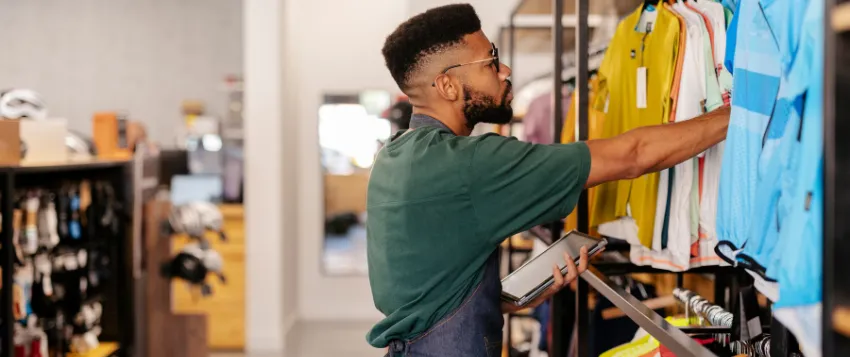

For many people, retail is where working life begins.
It may be a first job on the shop floor, a weekend position while studying, a sales role after school, or a store job taken while figuring out the next step. But in South Africa, retail is much more than that. It is one of the country’s most important employment sectors and one of the places where the economy is felt most directly.
Every price increase, every change in consumer confidence, every delivery delay, every online shopping habit and every new technology shows up in retail almost immediately.
That is why the question is no longer whether retail offers jobs. It clearly does. The better question is whether South Africa is doing enough to turn those jobs into real, visible and respected careers.
This was the central theme in a recent episode of Regenesys Talk with Jeremy Maggs, where Jeremy Maggs spoke to Nishen Munnisunker, CEO for Regenesys Corporate Education, Tom Mkhwanazi, CEO of the Wholesale and Retail SETA, and Nazim Cassim, CEO of the Retail Institute of South Africa. Their discussion was not just about retail as a business sector. It was about people, skills, dignity, career growth and the future of work in South Africa.
Retail Is Changing Because Customers Are Changing

Retail used to be easier to understand. A customer walked into a store, looked at what was available, compared a few prices and made a decision.
That world has not disappeared, but it has changed.
Today’s customer is more demanding, more informed and far less predictable. People compare prices online before entering a store. They expect convenience. They want quicker service. They want delivery options. They want value, but they also want quality. They want choice, but they do not want to waste time.
Jeremy Maggs captured this shift clearly in the podcast when he described South African consumers as becoming “more price sensitive”, “more choosy” and more “convenience-driven”.
That one sentence explains much of what is happening in retail right now.
Retailers are no longer competing only with the shop down the road. They are competing with apps, platforms, delivery services, social media recommendations, online reviews and customers who can change their buying behaviour overnight.
For Nishen Munnisunker, this shift starts with the customer. As he explained, “a lot of this change is being driven by the consumers themselves”. He pointed out that changing consumer behaviour is affecting how people interact with retailers, whether they still go into physical stores and what kind of business models retailers now need to build.
That means retail skills also need to change.
A successful retail professional today cannot only understand products and sales. They need to understand people. They need to understand behaviour. They need to understand why someone buys, why someone leaves, why someone switches brands and why convenience has become so powerful.
Retail Is No Longer Just About the Store

The store still matters. In many communities, it matters deeply.
People still want good service, clean shelves, helpful staff, fresh products and a human being who can assist when something goes wrong. Traditional retail skills are not disappearing. But retail is no longer only happening inside the store.
Behind every purchase, there is a bigger system. Stock has to move. Warehouses have to work. Digital platforms have to function. Customer data has to be understood. Delivery promises have to be kept. Pricing decisions have to be made carefully. Store teams have to respond quickly when customer expectations change.
Tom Mkhwanazi highlighted this when he spoke about the types of skills the sector needs. He pointed to the need for “data analysts” and people who can work in the background to understand customer needs. He also emphasised supply chain skills, noting that as more goods move through warehouses and delivery networks, “supply chain issues are really big”.
That is the new reality of retail.
A product on a shelf is no longer just a product on a shelf. It is part of a wider chain of decisions, from buying and storage to pricing, display, delivery and customer experience.
This is why retail should not be treated as low-skill work. It is practical, fast-moving and complex. The people who keep it running need far more recognition than they often receive.
The Middle of Retail Is Being Squeezed
One of the strongest insights from the podcast came from Nazim Cassim, who described the South African retail landscape as going through a “metamorphosis”.
He explained that the sector is splitting into different spaces. On one side, there are value-driven retailers serving price-sensitive customers. On the other, there are more premium and platform-based players focusing on convenience, data and customer experience. In the middle, some retailers are being squeezed.
That matters because different retail models need different types of talent.
A value-driven retailer needs people who understand cost control, inventory management and operational discipline. A premium or platform-led retailer needs people who understand data, customer experience, digital channels and service design.
So, when we talk about retail careers in South Africa, we should not speak about them as if every role is the same.
Retail now includes store operations, buying, merchandising, logistics, customer service, e-commerce, data analysis, digital marketing, finance, people management and business strategy. There are many ways to build a career in the sector, but people need to see the path.
That is where South Africa has work to do.
Retail Has Been Treated as Work, Not a Career System
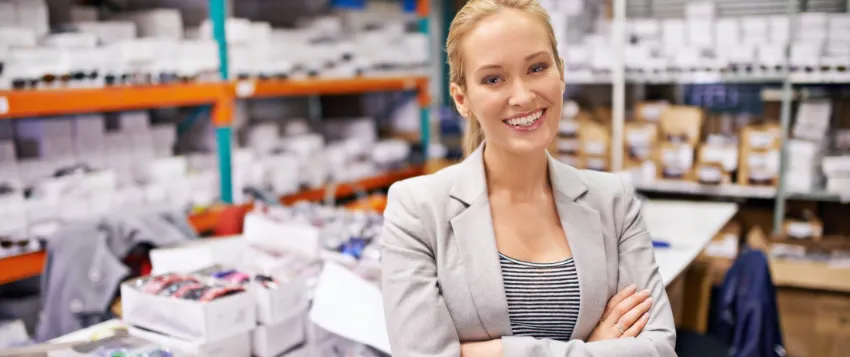
For years, many people entered retail almost by accident.
It was not always presented as a career of choice. It was seen as a job to take while waiting for something else. A place to earn income, but not always a place to build a future.
Nazim Cassim challenged that thinking directly in the podcast. He said, “we’ve always treated retail as work, not as a career system”.
That line is important because it gets to the heart of the problem.
When a sector is treated only as work, people may enter it without seeing where they can go. They may gain experience without receiving recognition. They may become good at what they do without being shown the next step. They may have potential, but no structured pathway to grow.
Nazim went further, explaining that retail has often lacked “clear pathway”, “consistent performance expectation” and visibility around long-term progression.
That is not just a business issue. It is a human issue.
People need to know that their work can lead somewhere. A young person entering retail should be able to see how today’s entry-level role can become tomorrow’s supervisory role, management role, specialist role or executive role. Without that clarity, talent gets lost.
From Shop Floor to Boardroom Should Not Be the Exception
One of the most powerful ideas in the discussion was that retail can take someone from an entry-level role to senior management.
This is not a motivational slogan. It happens. But it should happen more deliberately.
Nishen Munnisunker explained that a proper retail career pathway should allow someone to see how they can move “from a foundational level in an organisation” all the way to “director or executive director level or even CEO”.
That is a different way of looking at retail.
It says the person working on the shop floor is not just filling a role. They may be at the beginning of a serious career. The cashier, packer, sales assistant or junior supervisor may have the ability to become a store manager, regional manager, operations specialist, buyer, executive or business owner.
Nazim Cassim made this personal when he said, “I joined Massmart as a packer and I got from the shop floor to the boardroom.”
That kind of story matters because it changes how people see themselves.
When someone can see a path, they can begin to walk it with purpose.
The Future Retail Worker Needs Both Data and Human Understanding

A common mistake is to assume that the future of retail is only about technology. It is not. Technology will continue to change retail. Artificial intelligence, robotics, e-commerce platforms, customer data and automated systems will play a bigger role. But the future of retail will still depend on people who can interpret what technology shows them and use it to serve customers better.
Nishen Munnisunker spoke about the need for people who can “analyse data, understand the data and then start shifting models based on the data that’s there”.
But he also spoke about something equally important: customer psychology.
Retail professionals need to understand why people buy. They need to understand store design, product design, customer journeys and purchasing behaviour. In simple terms, they need to understand both the numbers and the human being behind the numbers.
That is what will separate good retail businesses from ordinary ones.
A spreadsheet can tell you what happened. A skilled retail professional can ask why it happened, what it means and what should change next.
Short Courses and Continuous Learning Matter More Than Ever
Retail moves too quickly for people to learn once and stop.
Tom Mkhwanazi made this point clearly when he spoke about the need to move beyond relying only on long, traditional qualifications. He said the sector also needs shorter programmes that can help people respond to the challenges coming through.
He also spoke about micro-credentials and continuous professional development, noting that what someone studied “20 or 30 years ago” may not be enough for the sector today.
That does not mean qualifications no longer matter. They still do.
But retail needs learning that can keep up with the pace of change. A person already working in the sector should be able to gain new skills without stepping away from work for years. A young person entering the sector should be able to see which qualification or short programme can help them move forward. An employer should be able to develop talent in a way that matches what is happening in stores, warehouses, online platforms and customer behaviour.
The future of retail learning has to be practical, flexible and continuous.
Why a School of Retail Matters

A dedicated School of Retail Management and Leadership matters because it gives the sector something it has often lacked: structure.
Jeremy Maggs described the launch as important because it “positions retail as a serious profession, one that will be and has to be taken seriously”.
That is the point.
People understand the path to becoming a doctor, lawyer, accountant or engineer because those professions have clear learning routes and recognised stages of development. Retail should not be treated as less important simply because many people enter it through practical work.
Retail has its own knowledge base. It has its own pressures. It has its own technical demands. It has its own contribution to the economy. It deserves a clearer system for developing people.
Tom Mkhwanazi said he was excited about the school because it is the first time South Africa has had a school focused on retail in this way. He noted that retail education has often been fragmented, with pieces added here and there.
A dedicated retail pathway helps change that.
It tells young people that retail is not something to fall into. It is something they can choose.
So, Can You Build a Real Career in Retail in South Africa?
Yes, you can. And that is exactly why this work matters.
Regenesys Corporate Education has partnered with the Retail Institute of South Africa to launch the Regenesys School of Retail, created to give the sector a practical way to develop the people who will shape its future.
The School of Retail is for those who want to do more than work in the sector. It is for people who want to understand retail better, grow into bigger roles and help build stronger teams.
Retail can open real doors. The difference is having the skills, guidance and confidence to make the most of them.
So, if you are ready to move from simply working in retail to building a future in it, Regenesys is ready to help you take the next step.