
Responsible leadership is becoming increasingly important as organisations respond to rapid technological change, social expectations, environmental pressures and new ways of working.
Business success is no longer measured only by revenue and profit. Customers, employees, investors and communities also consider how an organisation treats people, uses resources, makes decisions and contributes to society.
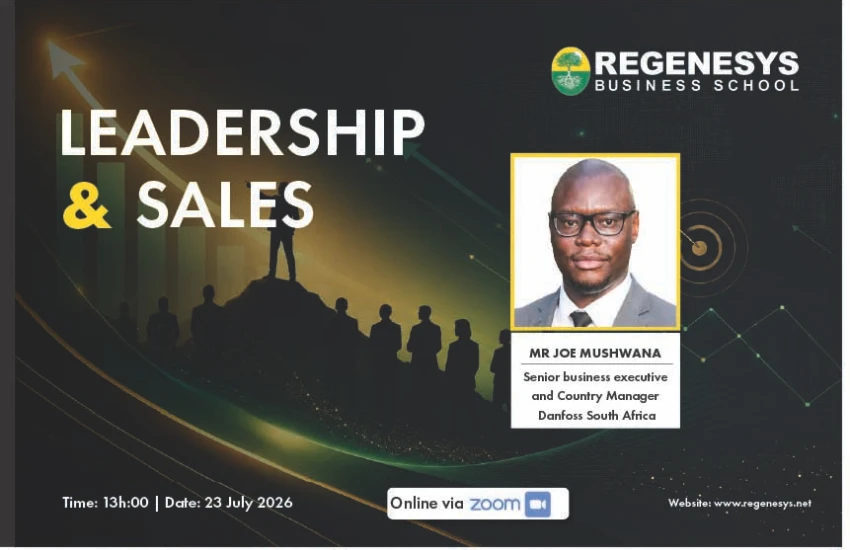
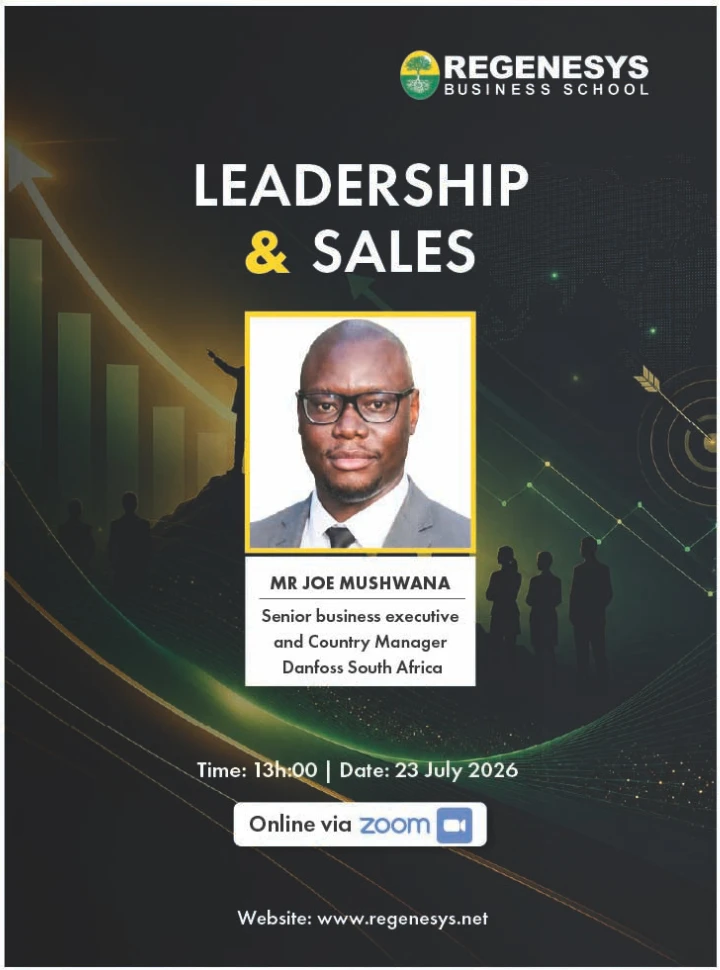
This was a central theme of the Regenesys masterclass, “Beyond Profit: How the ACBM and HCBM Qualifications Develop Responsible Leaders.” The session explored the changing skills required by employers, the role of ethical decision-making and how practical business education can prepare professionals to lead responsibly.
Watch the masterclass
The discussion also highlighted an important message: future-ready business leaders need more than technical knowledge. They need critical thinking, emotional intelligence, digital literacy, ethical judgement and the ability to understand how their decisions affect different stakeholders.
For aspiring managers, entrepreneurs and professionals, programmes such as the Higher Certificate in Business Management and the Advanced Certificate in Business Management can provide structured pathways for developing these capabilities.
What is responsible leadership?
Responsible leadership is an approach to leadership that considers the wider consequences of business decisions.
A responsible leader does not focus only on short-term financial performance. Instead, the leader considers how organisational decisions affect:
- Employees
- Customers
- Suppliers
- Communities
- Investors
- Government and regulators
- The environment
- Future generations
This approach requires leaders to balance organisational goals with ethical conduct, social responsibility and sustainable value creation.
Responsible leadership does not mean that profit is unimportant. Businesses need financial stability to operate, grow, employ people and invest in innovation. However, profitability should be pursued without ignoring people, purpose or the planet.
Why must business leadership go beyond profit?
Traditional business thinking often placed financial performance at the centre of organisational decision-making. Leaders were expected to increase revenue, reduce costs and maximise returns.
These responsibilities remain important. Nevertheless, businesses operate within societies and depend on employees, customers, infrastructure, natural resources and public trust.
A decision that produces a short-term financial gain may create long-term costs when it damages employee wellbeing, customer confidence, community relationships or environmental resources.
Responsible business leadership therefore considers four interconnected areas:
- People: How does the organisation affect employees, customers and communities?
- Planet: How does the organisation use resources and manage its environmental impact?
- Purpose: Why does the organisation exist beyond generating income?
- Profit: How can the organisation remain financially sustainable while acting responsibly?

Balancing these areas can help an organisation build trust, protect its reputation and make decisions that support long-term sustainability.
Why is responsible leadership important?
Leadership decisions shape organisational culture. Employees observe what leaders reward, tolerate and prioritise.
When leaders demonstrate fairness, accountability and integrity, these principles can influence behaviour throughout the organisation. When leaders ignore unethical conduct, employees may begin to believe that results matter more than how those results are achieved.
Responsible leadership can help organisations:
- Strengthen stakeholder trust
- Improve employee engagement
- Encourage ethical conduct
- Protect organisational reputation
- Make better long-term decisions
- Respond to social and environmental challenges
- Manage risk more effectively
- Create sustainable value
It can also help businesses respond more thoughtfully when different stakeholder interests conflict.
What are the qualities of a responsible leader?
Responsible leadership is demonstrated through decisions and behaviour rather than through a job title alone.
Important qualities may include the following.
Integrity
Integrity involves acting according to clear values, even when doing so is difficult or inconvenient. Responsible leaders aim to ensure that their actions are consistent with the standards they expect from others.
Accountability
Accountable leaders accept responsibility for their decisions and their consequences. They do not shift blame when an outcome is unsuccessful.
Empathy
Empathy helps leaders understand how decisions may affect people with different experiences, responsibilities and circumstances.
Critical thinking
Critical thinking allows leaders to examine information, challenge assumptions and consider different explanations before making a decision.
Problem-solving
Modern organisations face complex challenges that may not have one obvious solution. Responsible leaders must define problems carefully, identify possible causes and evaluate different responses.
Emotional intelligence
Emotional intelligence includes recognising and regulating emotions, understanding the perspectives of others and managing relationships constructively.
Resilience
Resilient leaders can respond to setbacks, learn from change and adjust their approach without losing sight of their responsibilities.
Collaboration
Responsible leaders recognise that useful ideas can come from different people. They create opportunities for others to contribute and encourage constructive disagreement.
Stakeholder awareness
Stakeholder awareness requires leaders to consider who may benefit from or be harmed by a decision.
Business management skills needed in the age of AI
Artificial intelligence and digital technologies are changing how organisations communicate, analyse information, serve customers and complete routine tasks.
As some tasks become automated, professionals need to develop skills that allow them to use technology productively while continuing to provide human judgement.
Future-ready business management skills may include:
- AI and digital literacy
- Data-informed decision-making
- Critical thinking
- Creative problem-solving
- Strategic planning
- Communication
- Negotiation
- Conflict management
- Emotional intelligence
- Ethical judgement
- Adaptability
- Collaboration
AI can process information quickly and generate possible responses. However, leaders remain responsible for deciding whether a recommendation is appropriate, ethical and aligned with organisational values.
Human judgement is especially important when decisions affect employment, customer privacy, access to services or vulnerable communities.
Why human skills still matter in the age of AI
Technology can support business decisions, but it does not remove the need for empathy, accountability and wisdom.
An automated system may identify patterns or suggest an efficient course of action. It may not fully understand the personal, cultural or social circumstances surrounding the decision.
Responsible leaders must therefore ask:
- Is the information accurate and complete?
- Could the data contain bias?
- Who may be disadvantaged by this decision?
- Does the decision respect privacy and dignity?
- Can the outcome be explained?
- Who remains accountable?
- Does the decision align with the organisation’s values?
The ability to ask these questions will remain important even as business technology becomes more advanced.
How responsible leaders make ethical business decisions
Ethical decision-making can become difficult when leaders face pressure, incomplete information or competing stakeholder interests.
The masterclass introduced a practical framework that leaders and students can apply when evaluating a business problem.
1. Establish the facts
Begin by identifying what is known, what remains uncertain and which information comes from credible sources.
2. Identify the stakeholders
Consider every group that may be affected, including employees, customers, suppliers, communities, investors and regulators.
3. Consider the available options
Avoid assuming that there are only two possible choices. Explore different responses and combinations of actions.
4. Assess the likely impact
Evaluate the possible short- and long-term consequences of each option. A decision that solves an immediate problem may create another problem later.
5. Test the decision ethically
Ask whether the preferred choice can be defended openly, whether it treats stakeholders fairly and whether it reflects integrity.
6. Review the outcome
After implementing the decision, monitor its effects and make adjustments when necessary.
This framework can be applied to workplace dilemmas, assignments, entrepreneurial decisions and personal career choices.
How practical business education develops better leaders
Business education should do more than ask students to memorise theories and reproduce them in an examination.
Students also need opportunities to apply concepts to realistic problems. This can happen through:
- Case studies
- Scenario-based assessments
- Group projects
- Business simulations
- Industry masterclasses
- Guest lectures
- Research assignments
- Workplace examples
For example, students may be asked to analyse a business facing digital disruption, evaluate a new market opportunity or recommend a response to an operational problem.
They may use tools such as SWOT analysis, stakeholder analysis and root-cause analysis to organise information and develop recommendations.
This form of applied learning can help students practise critical thinking, communication and decision-making before they face similar challenges professionally.
How responsible leadership supports African business growth
Africa presents significant opportunities for entrepreneurship, innovation and digital transformation. However, business growth must also respond to challenges such as unemployment, economic exclusion, unequal access to services and environmental pressure.
Responsible leaders can contribute by developing businesses and initiatives that are commercially viable while also addressing real community needs.
This may involve:
- Creating employment opportunities
- Supporting small businesses
- Improving access to digital services
- Expanding financial inclusion
- Developing sustainable products
- Using resources responsibly
- Strengthening ethical governance
- Investing in employee development
Business can become a positive force when leaders understand that their decisions influence society as well as organisational performance.
Who should study business management?
Business management studies may be suitable for people at different stages of their academic and professional journeys.
These may include:
- School leavers entering higher education
- Entry-level employees seeking business knowledge
- Aspiring entrepreneurs
- Career changers
- Professionals moving into supervisory roles
- Junior managers
- People responsible for teams or projects
- Employees seeking further academic progression
The most appropriate qualification will depend on the applicant’s previous education, experience and long-term goals.
Higher Certificate vs Advanced Certificate in Business Management
The Higher Certificate and Advanced Certificate support different stages of business and management development.
Higher Certificate in Business Management
The Regenesys Higher Certificate in Business Management is a foundational qualification for individuals who want to understand the main functions of a modern organisation.
It introduces areas such as business management, human resource management, financial management, marketing and personal development.
The qualification may suit:
- School leavers
- First-time higher-education students
- Entry-level professionals
- Career changers
- Aspiring entrepreneurs
- People seeking a pathway to further business studies
Advanced Certificate in Business Management
The Regenesys Advanced Certificate in Business Management is designed for learners who already have an appropriate foundational qualification and want to strengthen their management capabilities.
It can help learners develop knowledge related to managing people, processes and resources, while strengthening critical thinking and practical decision-making.
The qualification may suit:
- Aspiring junior managers
- Current supervisors
- Professionals preparing for middle-management responsibilities
- Business owners seeking stronger management skills
- Learners progressing from a relevant Higher Certificate
Prospective students should review the admission requirements and programme structures before applying.
Develop responsible leadership skills at Regenesys
Regenesys Business School integrates academic knowledge with practical application and personal development.
Through case studies, scenario-based assessments and exposure to contemporary business challenges, students can develop skills that support responsible management and leadership.
The Higher Certificate provides an accessible foundation for understanding business, while the Advanced Certificate can help eligible learners strengthen their ability to manage complex organisational responsibilities.
Explore the Regenesys Higher Certificate in Business Management if you want to begin building foundational business knowledge.
Explore the Regenesys Advanced Certificate in Business Management if you are ready to develop more advanced management and decision-making capabilities.
Final thoughts
Responsible leadership requires businesses to look beyond short-term profit and consider their broader impact.
Leaders must understand how their decisions affect people, communities, organisations and the environment. They also need the technical, human and ethical skills required to respond to a rapidly changing world.
Business education can support this development when it combines theory with practical problem-solving, industry exposure and personal reflection.
Whether you are entering higher education, changing careers or preparing for greater management responsibility, developing responsible leadership skills can help you contribute more effectively in the workplace and society.
Frequently Asked Questions
What does responsible leadership mean?
Responsible leadership means making decisions that consider financial performance as well as the interests of employees, customers, communities, the environment and other stakeholders.
Why is responsible leadership important in business?
It can strengthen trust, support ethical conduct, improve stakeholder relationships and help organisations make more sustainable long-term decisions.
What are the main qualities of a responsible leader?
Important qualities include integrity, accountability, empathy, critical thinking, emotional intelligence, resilience, collaboration and stakeholder awareness.
Can AI replace responsible business leaders?
AI can support research, analysis and routine tasks, but leaders remain responsible for evaluating recommendations, considering ethical consequences and making accountable decisions.
Who should consider a Higher Certificate in Business Management?
The qualification may suit school leavers, first-time higher-education students, entry-level professionals, career changers and aspiring entrepreneurs seeking foundational business knowledge.
Who should consider an Advanced Certificate in Business Management?
It may suit eligible learners who already have foundational business knowledge and want to prepare for junior or middle-management responsibilities.
How does business education develop responsible leaders?
Business education can develop responsible leaders through case studies, ethical decision-making exercises, practical projects, personal development and exposure to real organisational challenges.