An MBA is often seen as a key step for professionals seeking to move into leadership roles, change careers, or strengthen their business administration skills. Before enrolling for an MBA, it is important to understand the fees charged by different business schools in South Africa.
Costs can vary widely, so clear, realistic information helps you make better decisions. When you understand all the expenses involved, you can plan your finances with confidence and avoid unexpected costs later.
In this article, we explore the latest figures around the MBA cost in South Africa. This includes fees charged by top business schools, factors that affect the total cost, payment options & financing and a practical checklist to follow.
Table of Contents
What is an MBA Degree?
An MBA is not just another regular Master’s Degree; not in SA, not anywhere else. Conversely, an MBA is a professional certification that provides potential candidates with a comprehensive skill set that transforms them into intelligent managers of resources and astute leaders of men and women.
Whether as an aspiring entrepreneur or someone who plans to get to the highest rung on the managerial ladder, an MBA has become a minimum entry requirement into many conglomerates, retail chains, NGOs, and even in some aspects of public service.
From big banks to fund managers, retail store chains, and virtually every other industry or sector, an MBA is a desirable qualification that employers require – especially for mid-level and senior management positions. It is clear, then, that an MBA is a veritable tool, a surefire key that opens many doors both locally and internationally, placing the holder in prime position to get the best jobs out there and rise to the top of their career eventually.
Related: What is an MBA?
MBA Cost In South Africa
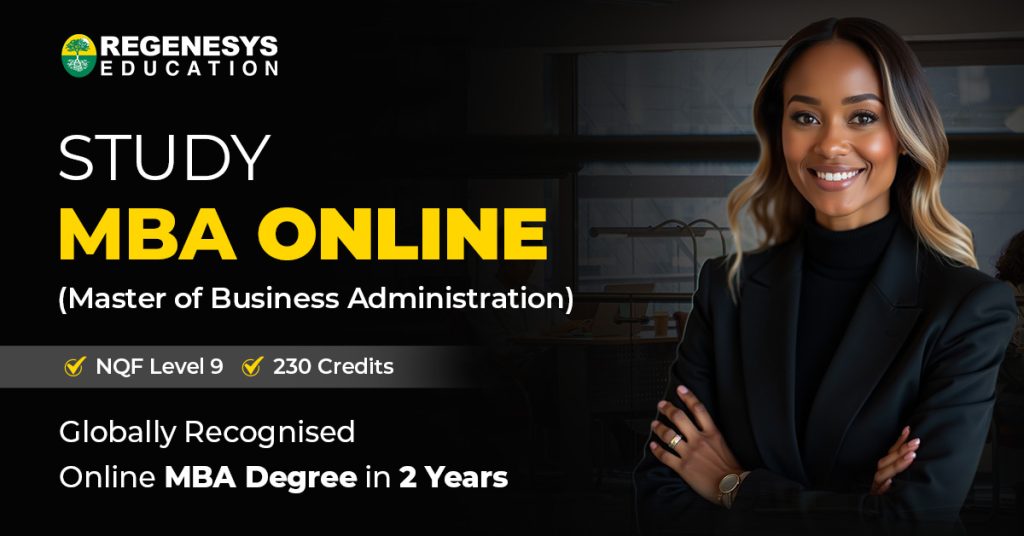
The cost of an MBA – Master of Business Administration programme varies widely in the country depending on the school, the study format and whether you are a South African, African or international student.
Tuition fees usually cover the core academic programme, but not living costs or additional charges such as application fees or international modules. Regenesys Business School offers flexible MBA payment options to suit different study needs.
Here are the fees charged by various prominent business schools in South Africa:
| Institution / Programme | Study Mode | Duration | Fee Details |
| Regenesys Business School – MBA (Contact) | Part-time | 24 months | First-year fee: R185,400• 2 semester instalments: R101,050 each• 12 monthly payments: R17,780 |
| Regenesys Business School – Online MBA | Online | 24 months | First-year fee: R134,840• 2 semester instalments: R73,490 each• 12 monthly payments: R12,925 |
| Wits Business School – MBA | Part-time | 24 months | Total fee: R379,825.01 |
| Gordon Institute of Business Science (GIBS) – MBA | Full-time | 16 months | Total tuition fee (incl. deposit): R334,223 |
| UCT Graduate School of Business – MBA | Full-time | 12 months | • African students: R367,000• Non-African students: R722,000 |
Factors That Affect The MBA Cost
The cost of an MBA in South Africa varies across institutions. Several practical factors influence how much you will pay, and understanding them helps you make a better decision.
One such key factor is the mode of study. Full-time, campus-based MBAs usually cost more because they include access to physical facilities, in-person teaching and student services.
Part-time, blended or online programmes are often more affordable and allow learners to continue working while studying. This helps them to manage their personal finances. Another important factor is the reputation and positioning of the business school.
Well-established schools with strong alumni networks, research output and industry links often charge higher fees. Also, longer programmes or those with additional modules cost more.
When you compare fees, check what is included. For example, whether the exam fees, study materials, or graduation fees are included in the fees or will be charged separately. Understanding these details will make cost comparisons easier.
Read more on Why Do an MBA Degree? A Path to Enhanced Skills and Professional Success.
Payment Options And Financing
Paying for an MBA can feel like a big challenge, but there are several ways to manage costs and make studying more affordable. Understanding your options in advance allows you to plan your finances and focus on learning without stress.
Many business schools allow students to pay their fees in instalments rather than in full. Fees can be paid in instalments, by semester, or by module. This helps you manage your finances more effectively while studying and working. Planning your finances in advance can make your studies smoother and less stressful.
Here are some ways to pay for your MBA:
- Instalment plans: Many schools let you pay fees in stages over different terms.
- Employer sponsorship: Ask if your employer can help cover fees.
- Scholarships and bursaries: Look for funding from the school or other organisations.
- Student loans: Some banks and government schemes offer loans for higher education.
Before finalising any payment option, request a full fee schedule that clearly states payment dates, any possible fee increases, and the rules for withdrawal or deferral.
Read more on MBA for Working Professionals: How to Get an MBA Degree?

Can I Access Loans to Cover my MBA Cost in South Africa?
Many business schools around the world offer all kinds of student aids and loans for potential candidates. While participating banks finance most of these aids, private employers and government departments also provide bursaries to their employers who meet specific criteria.
For individual MBA student loans, a good credit rating and consistent monthly surplus are minimum factors (among others) that banks require before such loans they grant such student aid. On the other hand, business schools that provide student aid rely on their credit committees to determine the creditworthiness of individuals and how much student loan they can grant such an individual.
Read more: What are the Requirements for Getting an MBA?
Practical Checklist Before You Sign Up
Before you accept an MBA offer, it is important to plan carefully. Having a practical checklist handy can help you avoid unexpected costs, choose the right programme, and make the most of your investment.
Following this checklist will give you a clear understanding of what to expect financially, academically and logistically. It helps you compare different programmes effectively and choose one that fits your goals and lifestyle.
Here is a practical checklist to properly compare total cost:
- Request a full fee breakdown that clearly lists tuition and any additional charges.
- Check the study mode and how often you need to attend classes on campus.
- Find out if the fees include access to alumni networks and career support services.
- Confirm scholarship deadlines and the timelines for student loan applications.
- If you plan to study on campus, compare living costs, including accommodation and travel.
Read more on Global Market Entry Strategies: Lessons from Regenesys Education MBA.
Why Choose Regenesys Business School For Your MBA?
Regenesys Business School offers a globally recognised MBA that is ideal for working professionals. The programme offers flexible learning options, practical leadership content, and AI modules included at no extra cost.
Regenesys Education emphasises decision-making, communication, and responsible leadership, while offering both online and on-campus learning options to suit diverse needs. If you are interested in an MBA programme that balances practical learning with flexible delivery, then this is a great option.
Read more on MBA Admission Requirements: What Regenesys Business School is Looking For?

Explore Our Other Programmes
Conclusion
Financial planning for the MBA includes more than tuition. You should also consider the study format, any additional charges, living costs, and how you will pay for the programme. MBA fees in South Africa vary widely across institutions, so it is important to compare full fee details and assess added value, such as career support and alumni networks.
If you are exploring an MBA at Regenesys Education, visit the website and review the programme page for detailed information.
Contact us to speak with a career adviser for expert guidance.
FAQs
How long does an MBA programme usually take in South Africa?
Most part-time MBAs take two years, while full-time MBAs typically run for one to two years, depending on the school.
Does the tuition fee include study materials and exam fees?
It depends on the school. Always request a full fee schedule that lists what is included and what is extra in terms of the MBA cost.
Can I study for an MBA while working full-time?
Yes, many South African institutions offer part-time and online MBA programmes designed for working professionals.
Are there scholarships for MBA aspirants in South Africa?
Yes, many schools offer bursaries and scholarships, and some employers also help fund studies. Check eligibility and deadlines early to avoid missing out.
What salary hike can I expect after an MBA in South Africa?
Salary hikes vary depending on the role and industry. However, most professionals get a meaningful salary increase after completing an MBA.