

Infection control for healthcare workers is essential for protecting patients, colleagues, families and communities from preventable infections.
Healthcare environments bring people, equipment, bodily fluids and high-touch surfaces into close contact. As a result, harmful microorganisms can spread when infection-prevention procedures are inconsistent or poorly understood.
Effective infection prevention and control is not limited to hospitals. It is relevant in clinics, care homes, community-health programmes, home-based care, emergency services, laboratories and any environment where people may be exposed to infection risks.
Every healthcare worker has a role to play. Hand hygiene, appropriate use of personal protective equipment, safe handling of sharps, environmental cleaning and early identification of possible outbreaks can all contribute to safer care.
This article explains the core principles of infection control, the practical precautions healthcare workers should understand and how professional training can strengthen workplace safety.
Professionals seeking structured training can explore the Regenesys Infection Control and Prevention Short Learning Programme.
What is infection prevention and control?
Infection prevention and control, commonly referred to as IPC, is a practical approach used to reduce the risk of infections spreading between patients, healthcare workers, visitors and the surrounding environment.
It includes the systems, behaviours and procedures used to prevent exposure to harmful microorganisms.
Common infection-control practices include:
- Performing hand hygiene at the appropriate times
- Selecting and using personal protective equipment correctly
- Cleaning and disinfecting surfaces and reusable equipment
- Following respiratory hygiene practices
- Handling sharps and clinical waste safely
- Using injections and medications safely
- Applying standard and transmission-based precautions
- Identifying and reporting infection risks
- Preparing for infectious disease outbreaks
These measures help interrupt the ways in which microorganisms move from one person, surface or piece of equipment to another.
Why is infection control important for healthcare workers?
Healthcare workers may come into contact with blood, respiratory droplets, body fluids, contaminated equipment and people carrying infectious organisms.
Without appropriate precautions, microorganisms can spread between:
- Patients and healthcare workers
- Different patients
- Healthcare workers and their colleagues
- Contaminated equipment and patients
- Healthcare facilities and surrounding communities
Strong infection-control practices help protect workers while improving patient safety and the overall quality of care.
They may also help healthcare facilities reduce avoidable disruptions, protect limited resources and respond more effectively when infection risks increase.
How do infections spread in healthcare settings?
To prevent infection, healthcare workers need to understand how microorganisms move between people and environments.
Transmission may occur through:
Direct contact
Direct contact occurs when microorganisms move from one person to another through physical interaction.
This may happen during patient examination, wound care or other activities involving close contact.
Indirect contact
Indirect transmission can occur through contaminated equipment, surfaces, linen, instruments or hands.
For example, reusable equipment that is not properly cleaned between patients may contribute to transmission.
Droplets
Respiratory droplets can be produced when an infected person coughs, sneezes, speaks or undergoes certain procedures.
Airborne transmission
Some infectious particles may remain suspended in the air and require additional precautions based on the suspected or confirmed infection.
Blood and body fluids
Exposure may occur through needlestick injuries, broken skin, mucous membranes or unsafe handling of contaminated items.
Healthcare workers should assess the potential route of exposure before beginning a task and apply the precautions required by their facility’s policies.
What are standard precautions in healthcare?
Standard precautions are the minimum infection-prevention measures healthcare workers should apply when caring for every patient, regardless of whether an infection has been diagnosed.
This approach is important because a patient may carry an infectious organism without showing obvious symptoms or having a confirmed diagnosis.
Standard precautions generally include:
- Hand hygiene
- Risk-based use of personal protective equipment
- Respiratory hygiene and cough etiquette
- Safe injection and medication practices
- Environmental cleaning and disinfection
- Safe handling of reusable medical equipment
- Appropriate management of linen and waste
- Prevention of needlestick and sharps injuries
The precautions required for a task depend on the possible exposure. For instance, gloves may be sufficient for one activity, while another may require gloves, a gown, eye protection and respiratory protection.
Healthcare workers should always follow their organisation’s approved procedures and current public-health guidance.
Why is hand hygiene essential in infection control?
Hands can carry microorganisms between patients, equipment, surfaces and healthcare workers.
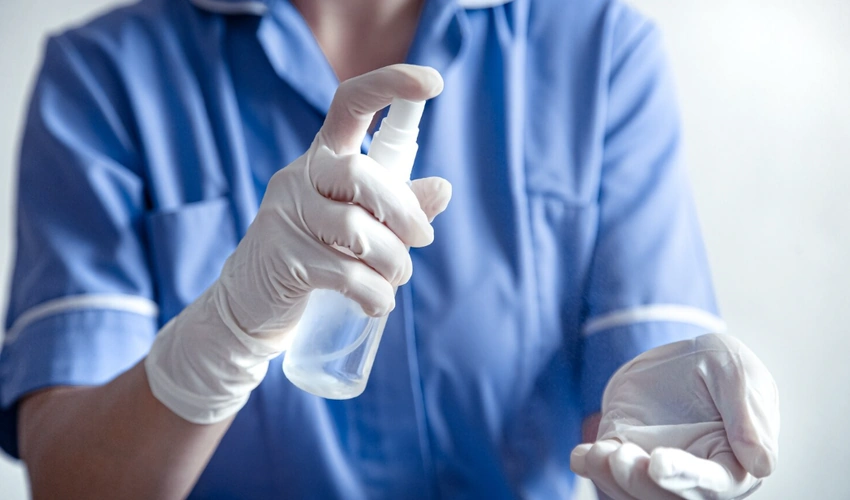
Therefore, effective hand hygiene is one of the most important elements of infection control for healthcare workers.
Hand hygiene may be required:
- Before touching a patient
- Before performing a clean or aseptic procedure
- After possible exposure to body fluids
- After touching a patient
- After touching the patient’s surroundings
- After removing gloves
- Before handling medication or clean equipment
Depending on the situation, workers may use soap and water or an approved alcohol-based hand rub.
However, wearing gloves does not replace hand hygiene. Hands should still be cleaned at the required moments, including after gloves are removed.
How should healthcare workers use personal protective equipment?
Personal protective equipment creates a barrier between the healthcare worker and potentially infectious material.
Common types of PPE include:
- Gloves
- Protective gowns or aprons
- Masks
- Respirators
- Goggles
- Face shields
PPE should be selected according to the activity being performed and the expected type of exposure.
For example:
- Gloves may be needed when contact with blood, body fluids, mucous membranes or contaminated equipment is expected.
- A gown or apron may be required when clothing or exposed skin could be contaminated.
- Eye and face protection may be needed when splashes or sprays are possible.
- A suitable respirator may be required where airborne transmission is a concern and facility guidance specifies its use.
Correct removal is as important as correct selection. Poor removal technique may contaminate the worker’s hands, clothing or surroundings.
PPE should be removed, disposed of or prepared for reprocessing according to workplace procedures. Hand hygiene should then be performed.
What are transmission-based precautions?
Transmission-based precautions are additional measures used when a patient is known or suspected to carry an infectious organism requiring more than standard precautions.
These may include:
- Contact precautions
- Droplet precautions
- Airborne precautions
The specific measures may involve patient placement, dedicated equipment, additional PPE and limits on movement within the facility.
Healthcare workers should not select these measures based only on personal judgement. They should follow current clinical guidance, facility protocols and instructions from the relevant infection-control team.
How can healthcare-associated infections be prevented?
Healthcare-associated infections are infections that develop during or following the delivery of healthcare and were not present or incubating when care began.
Prevention requires consistent action across the facility rather than relying on one individual or one procedure.
Important prevention measures include:
- Reliable hand-hygiene practices
- Appropriate cleaning and disinfection
- Safe insertion and management of medical devices
- Correct processing of reusable equipment
- Safe injection practices
- Appropriate use of PPE
- Early identification of infection risks
- Clear reporting and escalation procedures
- Regular staff education
- Monitoring adherence to infection-control procedures
Healthcare workers should report concerns early. Delayed reporting may allow the same risk to affect additional patients or employees.
What role does environmental cleaning play?
Frequently touched surfaces and shared equipment can become contaminated during routine care.
Examples may include:
- Bed rails
- Door handles
- Work surfaces
- Medical trolleys
- Monitoring equipment
- Bathroom surfaces
- Keyboards and shared devices
Cleaning removes dirt and organic matter, while disinfection uses an appropriate product or process to reduce harmful microorganisms.
Healthcare workers should understand:
- Which surfaces and equipment they are responsible for cleaning
- Which products should be used
- How products should be prepared and applied
- The required contact time
- How reusable equipment should be processed
- How cleaning activities should be documented
Using an incorrect product or failing to follow the required procedure may reduce effectiveness and create additional safety risks.
How should healthcare workers handle sharps safely?
Needles, blades and other sharp instruments can cause injuries and expose workers to bloodborne pathogens.
Safe sharps practices may include:
- Preparing equipment before beginning the procedure
- Using approved safety devices where available
- Avoiding unnecessary handling of used sharps
- Disposing of sharps immediately in an approved container
- Never overfilling sharps containers
- Following workplace rules regarding needle recapping
- Reporting injuries immediately
After a sharps injury, the worker should follow the facility’s exposure-management process without delay. This may include first aid, reporting, risk assessment and access to appropriate clinical evaluation.
Why is safe healthcare-waste management important?
Healthcare waste may contain blood, body fluids, contaminated materials, pharmaceuticals or sharp objects.
Incorrect disposal can place healthcare workers, waste handlers, patients and community members at risk.
Workers should separate waste according to approved categories and place it in the correct, clearly identified container.
They should also understand:
- Which waste is considered infectious
- How containers should be closed and stored
- When PPE is required during handling
- How spillages should be managed
- Who should be contacted when unsafe conditions are identified
Waste-handling procedures should always align with organisational requirements and applicable regulations.
Why does respiratory hygiene matter?
Respiratory hygiene helps reduce exposure to droplets and respiratory secretions.
Practical measures may include:
- Encouraging people to cover coughs and sneezes
- Providing tissues and appropriate waste containers
- Promoting hand hygiene after contact with respiratory secretions
- Using masks when indicated
- Separating symptomatic individuals where possible
- Maintaining appropriate ventilation according to facility requirements
Healthcare facilities should make respiratory-hygiene expectations clear to workers, patients and visitors.
Why does antimicrobial resistance matter?
Antimicrobial resistance occurs when microorganisms change in ways that reduce the effectiveness of medicines used to treat infections.
As a result, some infections may become more difficult to treat and require longer or more complex care.
Infection control contributes to the response by reducing opportunities for resistant organisms to spread.
Healthcare workers can support this effort by:
- Following standard precautions consistently
- Applying transmission-based precautions when required
- Maintaining hand hygiene
- Cleaning equipment correctly
- Following antimicrobial-use policies within their professional role
- Reporting possible transmission concerns
- Educating patients according to approved guidance
Preventing an infection can reduce the need for antimicrobial treatment in the first place.
How should healthcare facilities prepare for outbreaks?
An outbreak may place additional pressure on staffing, supplies, communication systems and normal patient-care processes.
Prepared facilities are better positioned to identify risks early and coordinate an appropriate response.
Outbreak preparedness may involve:
- Clear reporting and escalation procedures
- Defined staff responsibilities
- Access to appropriate PPE and cleaning supplies
- Patient-screening processes
- Isolation or separation procedures
- Staff training and practical drills
- Internal and external communication plans
- Monitoring of cases and possible exposures
- Continuity plans for essential services
Healthcare workers should know who to contact, what information to record and which immediate precautions to apply when an unusual infection pattern is suspected.
What should healthcare workers do after an exposure?
Possible occupational exposure may involve blood, body fluids, respiratory secretions, contaminated sharps or another infectious source.
The exact response depends on the type of exposure. However, workers should generally:
- Perform the required immediate first-aid action.
- Report the exposure promptly.
- Follow the facility’s occupational-health procedure.
- Provide accurate information about what happened.
- Attend the recommended clinical assessment.
- Complete any required follow-up.
Workers should not delay reporting because they believe the exposure is minor. Early assessment may be important for determining the appropriate response.
Who should complete infection-control training?
Infection-prevention knowledge is valuable for clinical and non-clinical workers who may encounter infection risks.
Training may benefit:
- Nurses and clinical support workers
- Community health workers
- Home-based carers
- Frail-care workers
- Caregivers
- Environmental health and sanitation workers
- Healthcare cleaning and support teams
- Occupational health and safety representatives
- NGO and NPO health programme staff
- Workers in settings where infection exposure may occur
Training is particularly useful for people who need a structured understanding of how infections spread, how precautions are selected and how infection risks should be managed in practice.
How can infection-control training support your career?
Infection-control training can strengthen the practical knowledge healthcare workers use to protect themselves and the people in their care.
It may help professionals:
- Understand routine infection-prevention responsibilities
- Use PPE more appropriately
- Recognise common transmission risks
- Respond more confidently to workplace incidents
- Contribute to safer healthcare environments
- Support organisational infection-control procedures
- Strengthen their professional-development profiles
However, completing a short course does not replace professional registration, clinical qualifications, workplace supervision or role-specific authorisation.
Healthcare workers should apply their learning within the limits of their role and in accordance with approved protocols.
How should you choose an infection-control course in South Africa?
Before enrolling in an infection prevention and control course, consider whether the programme aligns with your responsibilities and professional-development goals.
Review the following:
- Programme content and learning outcomes
- Duration and study format
- Admission requirements
- Accreditation or continuing-education recognition
- Practical relevance to your workplace
- Coverage of hand hygiene, PPE and standard precautions
- Outbreak-preparedness content
- Assessment and certificate requirements
- Course fees and available payment options
A useful course should go beyond definitions. It should help learners understand how infection-control principles are applied in realistic healthcare and community settings.
Study Infection Control and Prevention at Regenesys
Healthcare workers need infection-control knowledge that is clear, structured and relevant to real working environments.
The Regenesys Infection Control and Prevention Short Learning Programme introduces essential practices used to manage infection risks in healthcare and community settings.
The programme covers areas such as:
- How infections spread
- Hand hygiene
- Personal protective equipment
- Standard safety practices
- Healthcare-associated infections
- Antimicrobial resistance
- Outbreak response
- Facility preparedness
The three-day online programme carries 24 clinical Continuing Education Units and is designed to provide practical knowledge that can be applied in infection-risk environments.
It may be suitable for public and private healthcare workers, community health workers, caregivers, home-based carers, sanitation workers, NGO or NPO health staff and occupational health and safety representatives.
Final thoughts
Effective infection control for healthcare workers depends on consistent action rather than occasional precautions.
Hand hygiene, correct PPE use, environmental cleaning, safe waste management and early reporting all contribute to preventing transmission.
Healthcare workers should also understand that infection prevention is a shared responsibility. Individual practices must be supported by suitable supplies, clear procedures, ongoing education and responsible leadership.
By strengthening infection-control knowledge and applying approved precautions consistently, healthcare workers can help protect themselves, their patients and the wider community.
Frequently Asked Questions
What is infection control for healthcare workers?
Infection control for healthcare workers includes the practices used to reduce the spread of harmful microorganisms between workers, patients, equipment and healthcare environments.
What are the main infection-control precautions?
Core precautions include hand hygiene, risk-based PPE use, respiratory hygiene, environmental cleaning, safe injections, appropriate equipment processing and safe management of sharps and waste.
Should standard precautions be used for every patient?
Yes. Standard precautions are intended for all patients in all healthcare settings, regardless of whether an infection is suspected or confirmed.
Do gloves replace hand hygiene?
No. Gloves do not replace hand hygiene. Hands should be cleaned at the appropriate times, including after gloves are removed.
What is the difference between standard and transmission-based precautions?
Standard precautions apply during all patient care. Transmission-based precautions are additional measures used for certain suspected or confirmed infections spread through contact, droplets or airborne routes.
Who should study infection prevention and control?
Training may benefit healthcare workers, caregivers, community health workers, home-based carers, environmental health workers, sanitation staff and others working in settings where infection risks are present.
Can infection-control training improve patient safety?
Training can help workers understand and apply practices that reduce infection risks. However, safer care also depends on adequate resources, workplace systems, supervision and consistent adherence.
Is the Regenesys Infection Control and Prevention programme online?
Yes. Regenesys currently presents the three-day Infection Control and Prevention Short Learning Programme as an online programme.