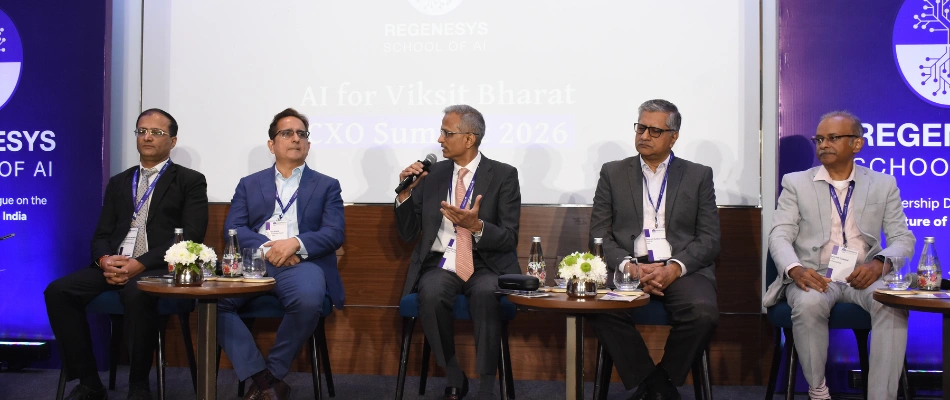

Artificial Intelligence (AI) is becoming one of the most influential technologies shaping the global economy. In India, it is also expected to play a crucial role in achieving the vision of Viksit Bharat 2047 – a developed nation driven by innovation, digital transformation, and strong leadership.
The AI for the Viksit Bharat CXO Summit 2026, organised by Regenesys School of AI, brought together industry leaders, technology experts, and business executives. They discussed how organisations can prepare for an AI-driven future. Through keynote sessions and panel discussions, the event explored how artificial intelligence is transforming sectors such as banking, healthcare, IT, and global capability centres (GCCs).
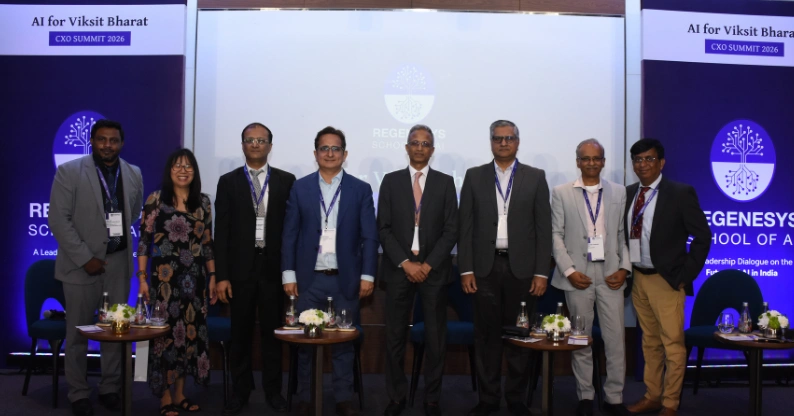
Across discussions, one theme remained clear: AI is no longer just an emerging technology. It is becoming a strategic priority for organisations across industries.
Table of Contents
Setting the Vision for the AI Decade
The summit began with an opening address centred on “The AI Decade: Preparing Leaders for 2047″. Leaders from the Regenesys School of AI, along with distinguished guests, shared perspectives on how organisations must prepare for the next phase of technological transformation.
The opening sessions highlighted that AI is not only changing business processes but also influencing leadership, governance, and education. As organisations adopt AI at scale, leaders must develop strategies that balance innovation with the responsible use of technology.
Speakers also emphasised the importance of collaboration between industry, academic institutions, and policymakers. Such partnerships will be important in building the skills, infrastructure, and governance frameworks needed to support India’s digital growth.
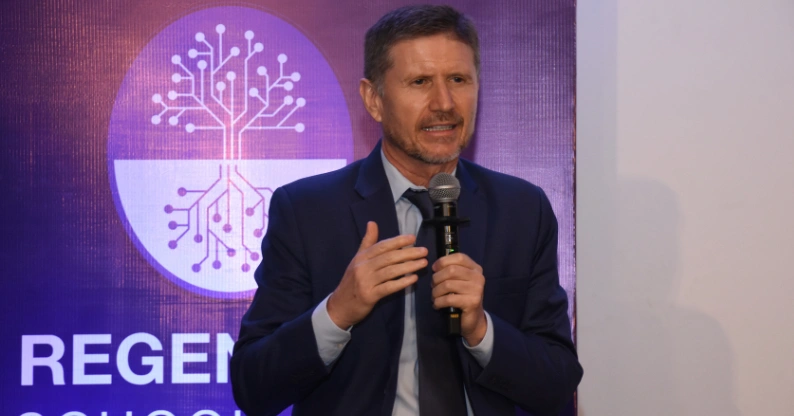
Read on School of AI Transforming Artificial Intelligence Education
Reimagining BFSI in the AI Era
One of the key discussions at the summit focused on the Banking, Financial Services, and Insurance (BFSI) sector. With increasing digital adoption and rising customer expectations, AI is transforming how financial institutions operate.
Panelists explored how AI is enabling fraud detection, algorithmic risk management, hyper-personalised banking experiences, and improved financial decision-making. However, many organisations still face challenges when scaling AI across the enterprise.
The discussion raised important questions around whether the main gap lies in technology, data infrastructure, or skilled talent.
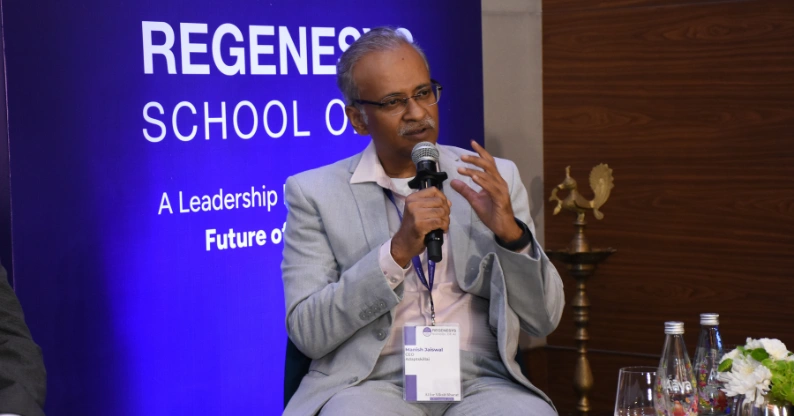
During the panel, Manish Jaiswal, Founder of Adaptskill AI, highlighted the deep integration AI must have within organisations. He explained:
“If each function of the organisation is an organ, AI is the bloodstream.”
His analogy reflected the growing understanding that AI should not remain limited to isolated pilot projects. Instead, it must flow across business functions to support smarter decisions and efficient operations.
From Execution Hubs to AI Value Creators: The Role of GCCs
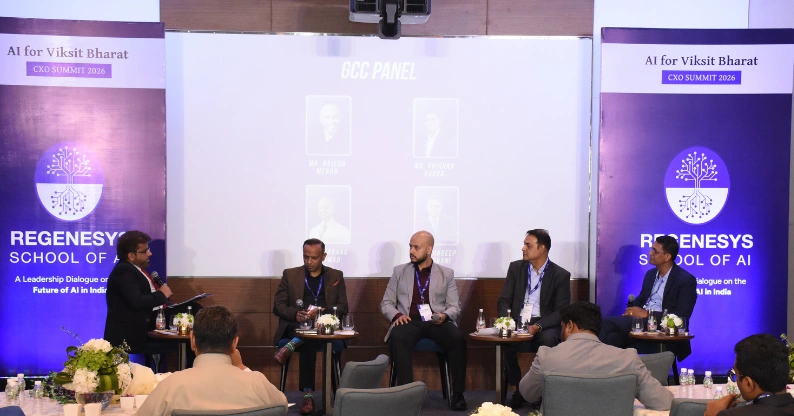
Another important panel discussion explored the changing role of Global Capability Centres (GCCs). Traditionally known for operational support and cost efficiency, GCCs are now evolving into centres for innovation and strategic value creation.
Panelists discussed how AI is enabling GCCs to move beyond execution roles and contribute to enterprise-wide transformation through predictive analytics, intelligent automation, and AI-driven product development.
During the discussion, Krishna Kabra, India Head GCC Leader at Orange, highlighted how AI has evolved within organisations:
“Now, AI itself is a function; it is not an enabler.”
This statement reflects how AI is increasingly becoming a core capability rather than a supporting tool.
At the same time, Rajesh Menon, GCC Site Leader at CrowdStrike, emphasised India’s growing importance in the global technology ecosystem. He noted:
“India has become a centre where everybody wants their global hubs to start operating from.”
This trend highlights the strength of India’s digital infrastructure and talent pool, which continues to attract multinational companies to establish global innovation hubs in the country.
Building a Future-Ready Healthcare Sector
AI is also transforming healthcare systems around the world. During the healthcare panel discussion, experts explored how artificial intelligence can improve patient care, increase efficiency, and support better healthcare outcomes.
Technologies such as AI-driven diagnostics, predictive analytics, and health data intelligence are helping healthcare professionals make faster and more accurate decisions. These tools can also improve hospital operations and patient management systems.
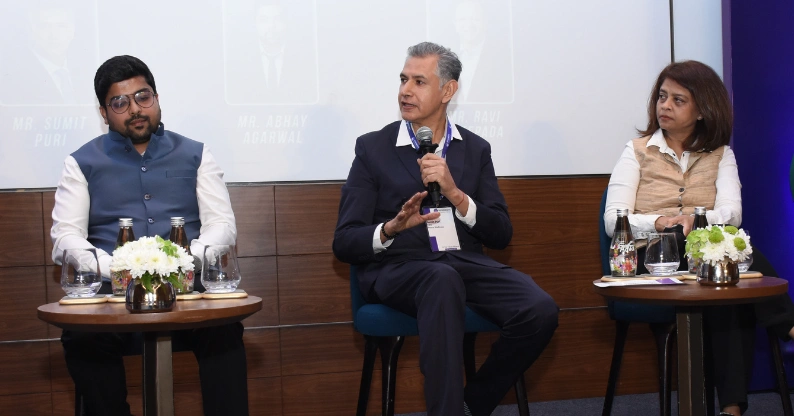
Sumit Puri, CEO of Prana Wellness, highlighted the need to shift healthcare systems towards preventive and personalised care. He explained:
“Healthcare in most developing countries is not secured; we have to move towards healthcare and prevention. From reactive to preventive care is the intention. It has to be personalised, data-driven, and outcome-orientated.”
Similarly, Dr Manisha Bobabde, CEO of K J Somaiya Hospital & Research Centre, emphasised that technology should strengthen human care rather than replace it. She said:
“Empowered human being is going to take care of another human being in a much better way. We can reach further, care better, and achieve earlier diagnosis, and it will make wonders because innovation and humanity will rise together.”
These discussions reinforced the idea that AI can support healthcare professionals in delivering more accessible, efficient, and patient-focused services.
Competing in the Age of AI
The summit also explored how organisations can remain competitive as AI continues to reshape industries. The discussion focused on three key factors: strategy, scale, and speed.
Businesses must embed AI into their core strategies rather than treating it as an isolated technology initiative. Organisations that scale AI solutions across operations while maintaining strong governance frameworks are more likely to succeed in the digital economy.
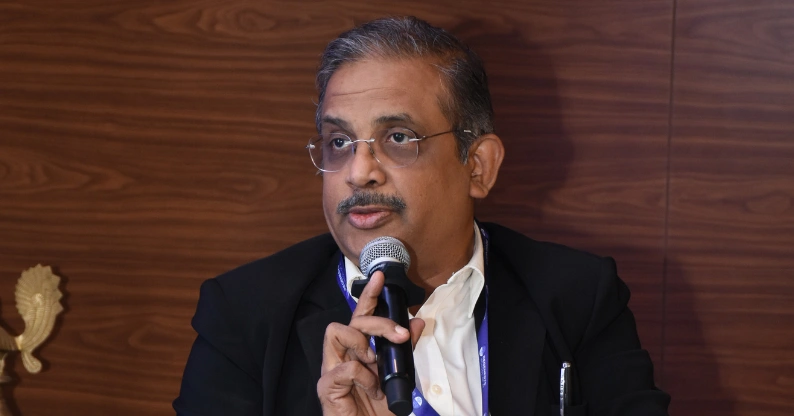
During the panel, Sivaraman Swaminathan, Founder and Partner at ContraMinds Labs, emphasised the importance of solving business problems before implementing technology. He stated:
“When you start with the technology and then look at the business problem, you won’t get any benefit. The maximum impact is when you first look at the business problem you are trying to solve.”
His insight highlighted the importance of aligning AI adoption with real organisational needs.
Read on Artificial Intelligence in Technology – Shaping the Future
Preparing the Workforce for the AI Era
Another key theme throughout the summit was workforce transformation. As AI adoption grows, organisations must equip employees with new skills to remain competitive.
Experts emphasised that professionals will increasingly need skills such as data literacy, AI understanding, critical thinking, cybersecurity awareness, and ethical AI governance.
Rather than replacing human workers, AI is expected to augment human decision-making. Organisations must therefore focus on continuous learning and workforce development to prepare employees for an AI-enabled future.
Read on Artificial Intelligence in the Workplace – Benefits and Examples
Conclusion
The AI for the Viksit Bharat CXO Summit 2026 by the Regenesys School of AI provided valuable reflections on how artificial intelligence is shaping India’s technological and economic future. Across industries such as banking, healthcare, IT, and global capability centres, AI is becoming a major driver of innovation and transformation.
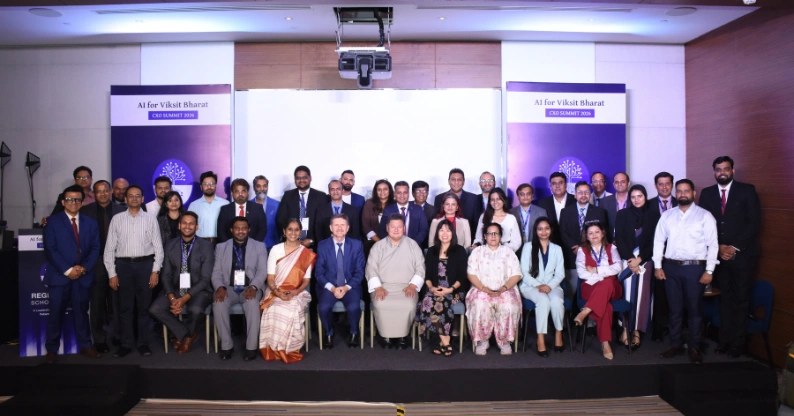
The discussions highlighted that successful AI adoption requires more than advanced technology. It depends on leadership, strong governance, skilled professionals, and a clear understanding of business challenges.
As India continues its journey towards Viksit Bharat 2047, collaboration between industry leaders, educators, and policymakers will play a crucial role in shaping the country’s AI-driven future. Regenesys School of AI, through the CXO Summit, helped bring these conversations together and encouraged organisations to prepare for the opportunities ahead.
FAQs
What was the purpose of the Regenesys AI CXO Summit?
The summit aimed to bring together industry leaders and experts to discuss how artificial intelligence can support India’s development and drive innovation across sectors.
Which industries were discussed during the summit?
The event included discussions on several sectors, including BFSI, healthcare, IT/ITES, manufacturing, and global capability centres.
Why is AI important for India’s Viksit Bharat vision?
AI can improve productivity, enable data-driven decision-making, support innovation, and strengthen digital infrastructure, making it an important driver of economic growth.
What skills are important for the future workforce in the AI era?
Skills such as data literacy, AI understanding, critical thinking, cybersecurity awareness, and responsible AI governance will be important for professionals working in AI-driven organisations.