
Artificial intelligence is accelerating innovation while raising new ethical and technological challenges.
AI in Technology Is Moving Faster Than Most Organisations Are Ready For
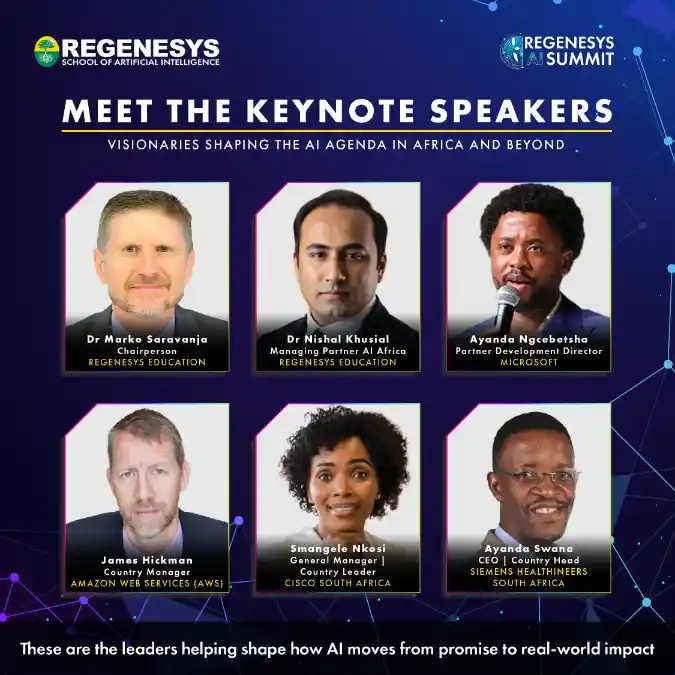
On 9 April 2026, Regenesys Education will host the Regenesys AI Summit in Sandton, bringing together leaders, innovators, and decision-makers to confront one of the most important questions in technology today: how do we embrace AI’s power without losing control of its consequences? The summit arrives at the right moment. AI is no longer a future concept being tested in labs or discussed in trend reports. It is already reshaping how organisations build, compete, hire, govern, and grow.
That is exactly why the conversation can no longer be one-sided. For every breakthrough in speed, automation, and predictive power, there is a corresponding conversation about accountability, trust, bias, energy demand, skills, and regulation. The real story of AI in technology is not just that it is powerful. It is that it is powerful enough to do good, cause harm, and disrupt entire systems at the same time.
The Good: AI Is Accelerating Productivity, Development, and Decision-Making
The case for AI in technology is not difficult to make. It is already helping developers move faster, teams automate repetitive tasks, analysts spot patterns at scale, and businesses make decisions with more speed than traditional workflows allow. In a controlled study published by Microsoft Research, developers using GitHub Copilot completed a coding task 55.8% faster than those without it. That is not a marginal gain. That is a signal that AI is changing the economics of output.
This is where AI becomes genuinely valuable in technology environments. It can shorten development cycles, improve operational efficiency, support customer service, assist with quality assurance, and turn massive volumes of data into usable insight. It can also give smaller teams capabilities that previously required larger budgets and more specialised capacity. Used well, AI does not just save time. It changes what teams are capable of achieving within the same time.
That promise is part of why the Regenesys School of AI matters now. The challenge is no longer simply getting access to AI tools. The real challenge is building the practical understanding to apply them intelligently, strategically, and responsibly. The organisations that benefit most from AI will not be the ones using the loudest tools. They will be the ones with the clearest thinking.
The Bad: AI Bias, Weak Governance, and Blind Adoption Can Create Serious Risk
The excitement around AI often hides an uncomfortable truth: powerful systems can also scale bad decisions. When AI is trained on flawed data, used without oversight, or embedded into high-stakes processes carelessly, it can reproduce bias, damage trust, and create consequences that are difficult to reverse. The NIST AI Risk Management Framework was created precisely because AI risks affect individuals, organisations, and society, and those risks need to be identified and managed deliberately rather than ignored until something fails.
This is where many organisations get ahead of themselves. They want the productivity gains of AI, but they do not invest enough in governance, validation, accountability, or human oversight. That is when AI moves from being an asset to becoming a liability. A fast system that produces biased or misleading outputs is not a smart system. It is a dangerous one. In practice, responsible AI means asking harder questions before deployment: who owns the decision, what data informed it, how transparent is the system, and what happens when it gets something wrong?
In education and research, the warning signs are already clear. UNESCO’s guidance on generative AI argues that AI is advancing faster than many regulatory and institutional frameworks can keep up with. That matters far beyond classrooms. It tells us something broader about the current technology moment: adoption is accelerating faster than many governance systems are maturing.
The Disruptive: AI Is Reshaping Infrastructure, Skills, and Competitive Power
What makes AI especially disruptive is that it is not only changing software or workflow. It is changing infrastructure itself. According to the International Energy Agency, global data centre electricity consumption is projected to rise to around 945 TWh by 2030, nearly double 2024 levels, with AI as a major driver. That means the AI conversation is no longer just about tools and talent. It is now about energy, compute capacity, national readiness, and who is able to build at scale.
This matters for leadership because AI disruption is not neat. It does not arrive in one department and wait politely to be understood. It cuts across operations, product development, cybersecurity, talent, compliance, and customer experience all at once. It changes what companies need from technical teams, but it also changes what boards, executives, educators, and policymakers need to understand. The old separation between technology strategy and business strategy is getting weaker by the day.
That is also why conversations around AI skills are becoming more urgent. Technical ability still matters, but so do judgement, ethics, governance, communication, and leadership. Regenesys has already explored this in pieces such as AI Skills Every Professional Must Learn in 2026 and Ethical AI: Challenges and Solutions in the Modern Era. The future will reward people who can work with AI critically, not just people who know how to prompt it.
AI in South Africa Needs More Than Hype. It Needs Serious Dialogue
The South African context makes this conversation even more important. Cabinet has now approved the publication of the country’s draft AI policy for public comment, signalling that AI is moving from a private-sector innovation issue into a national governance issue as well. The stated aim is to ensure that both the benefits and risks of AI are shared fairly across society and generations. That is a powerful reminder that AI is not only about innovation. It is also about inclusion, fairness, public trust, and national competitiveness.
South Africa does not need more shallow excitement about AI. It needs sharper thinking. It needs serious debate about what responsible adoption looks like across sectors such as finance, healthcare, education, government, and technology itself. It needs spaces where optimism is challenged by ethics, where innovation is tested against governance, and where leadership is measured by foresight rather than fashion. That is why articles like Why South Africa Needs an AI Summit Now matter, and it is why the summit itself matters even more.
Why the Regenesys AI Summit Matters Now
The value of the Regenesys AI Summit is not just that it focuses on AI. It is that it creates room for the right kind of AI conversation. Not the overhyped version. Not the fear-driven version. The useful version. The version that asks how technology can create growth without deepening inequality, how innovation can move quickly without leaving ethics behind, and how leaders can prepare for disruption without surrendering critical judgement.
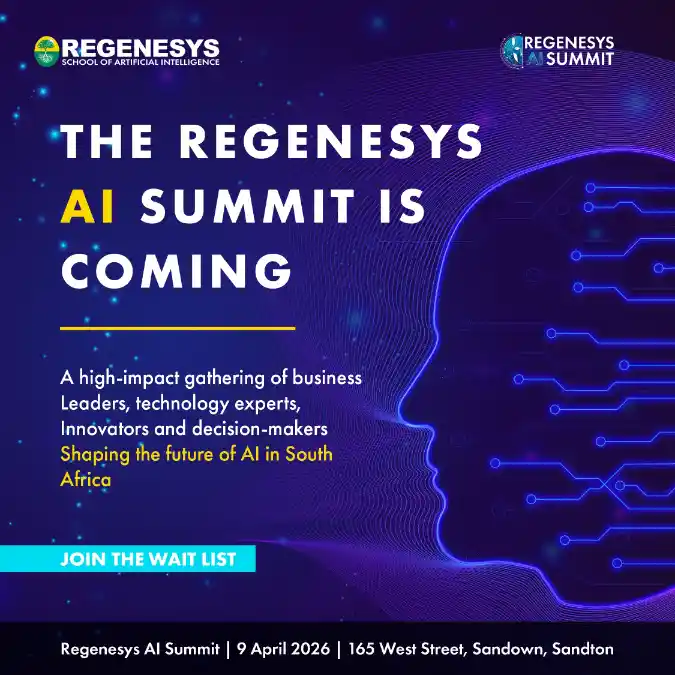
AI in technology is already proving that it can do extraordinary things. It can speed up development, improve productivity, unlock new services, and transform how organisations operate. But it is also exposing weaknesses in governance, amplifying risks that many institutions are still unprepared for, and disrupting infrastructure and power dynamics far beyond the screen. That is the truth of AI today. It is good. It is bad. And it is deeply disruptive. The real question is whether leaders are prepared to engage with all three realities honestly. That is the conversation Regenesys is bringing to Sandton, and it is exactly the conversation South Africa needs now.