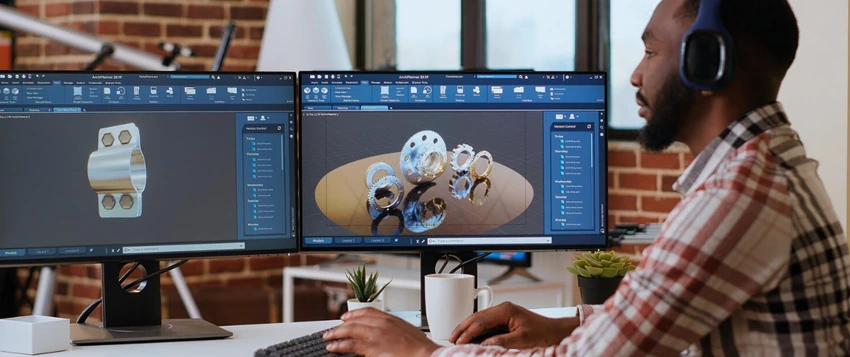

Many students interested in technology and creativity often ask an important question: Can you study interactive design without Mathematics? Interactive design is a growing field that focuses on creating engaging digital experiences through websites, mobile applications, and other digital platforms.
Students sometimes worry that strong mathematical skills are required to enter technology-related programmes. However, the good news is that many programmes allow students to pursue interactive design without Mathematics or without an advanced mathematics background.
Table of Contents
The focus of such programs is mainly on:
- Creativity and design
- Digital tools and technologies
- User experience (UX)
Do You Need Mathematics for Interactive Design?
A strong mathematics background is not mandatory to study Interactive Design. However, having basic mathematical knowledge can be beneficial, as the programme includes modules that cover fundamental and applied mathematical concepts.
These modules are designed to help students:
- Develop logical thinking.
- Improve problem-solving skills.
- Build analytical abilities for technology-related tasks.
Students are guided step-by-step through the concepts so that even those without prior extensive mathematical experience can understand and apply them effectively.
Read More = IT Interactive Design Careers Guide
Mathematics for Interactive Design
Although Interactive Design focuses mainly on creativity and digital technologies, basic mathematics is introduced to support logical thinking and problem-solving skills.
These mathematical concepts help students:
- Understand programming logic.
- Analyse digital systems.
- Solve technical and design-related problems effectively.
Students learn basic mathematical topics such as arithmetic operations, sets, permutations and combinations, and simple analytical techniques. These concepts are practical and application-based, helping students think systematically when designing and developing digital applications. Mathematics in Interactive Design is primarily application-based, used to strengthen analytical and problem-solving abilities rather than focusing on complex mathematical theories.
Read More = Bachelor of Interactive Design Admission Requirements
Conclusion
Mathematics in an Interactive Design BIT programme is mainly introduced to support logical thinking and problem-solving rather than advanced theoretical learning. The focus is on basic and applied concepts that help students understand technology and digital systems.
Key takeaways:
- Strong mathematics skills are not required.
- Application-based concepts are taught during the programme.
- Mathematics is application-oriented rather than theory-heavy.
- Students can succeed without a strong mathematics background.
By developing basic mathematical and analytical skills during the programme, students can build the competencies required for careers in interactive design and digital technology.
FAQs
Do I need strong mathematics skills to study Interactive Design?
No. Strong mathematics skills are not usually required. Basic mathematical understanding is generally sufficient.
Is mathematics included in the BIT Interactive Design program?
Yes. The programme may include mathematics modules, but they focus mainly on basic and applied mathematics rather than advanced theoretical concepts.
Can I study Interactive Design if I did not take mathematics in school?
Yes. Many programmes include foundation mathematics modules that help students learn the necessary concepts during the course.
What type of mathematics is taught in the BIT program?
Students may learn topics such as basic arithmetic, sets, permutations and combinations, and analytical techniques.
Why is mathematics included in the Interactive Design program?
Mathematics helps develop logical thinking and problem-solving skills, which are useful in areas such as programming, data analysis, and system design.